Quora, often considered the quiet giant of knowledge-sharing platforms, continues to evolve as a powerhouse for digital marketing in 2026. Far from being just a simple Q&A website, it's a dynamic ecosystem where intent-driven users actively seek solutions, information, and recommendations, presenting a unique opportunity for brands to build authority, engage audiences, and drive high-quality traffic. If you're looking to cut through the digital noise and connect with a genuinely engaged audience, understanding Quora marketing in 2026 is no longer optional—it's essential.
This comprehensive guide will unravel the intricacies of Quora marketing, offering actionable strategies to leverage its potential, from crafting compelling answers to mastering its advertising features. We'll explore how Quora helps amplify your brand's voice, establish thought leadership, and even influence AI-driven search results.
Table of Contents
Introduction: Quora in 2026 – More Than Just Q&A
Why Quora Marketing Shines in 2026: The Power of Intent
Quora's Role in Modern SEO and AI Visibility
Crafting Your Compelling Quora Profile
Mastering the Art of Answering: Building Authority Through Value
Strategic Link Placement: Driving Qualified Traffic
Leveraging Quora Spaces: Community Building & Distribution
Quora Ads: Unlocking High-Intent Audiences
Full-Funnel Quora Marketing Strategies
Measuring Your Quora Marketing Success
Common Quora Marketing Mistakes to Avoid in 2026
The Content Flywheel: Amplifying Your Reach
Frequently Asked Questions (FAQ)
Key Takeaways
1. Introduction: Quora in 2026 – More Than Just Q&A
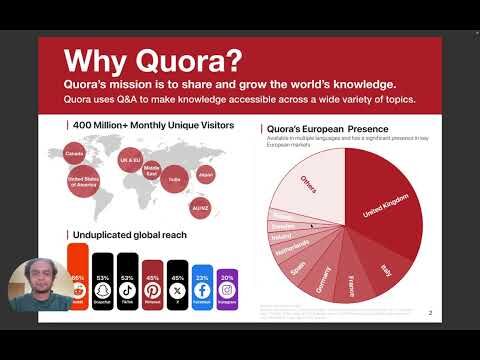
In the ever-evolving landscape of digital marketing, Quora stands out as a unique and often underutilized platform. Founded in 2009 by former Facebook employees Adam D'Angelo and Charlie Cheever, its mission has always been to share and grow the world's knowledge. In 2026, Quora continues to fulfill this mission, attracting over 400 million monthly active users globally who are actively seeking solutions, information, and recommendations.
Unlike many social media platforms where users passively scroll through feeds, Quora users arrive with specific questions and a clear intent to learn. This intrinsic user behavior makes Quora a prime environment for businesses and individuals alike to engage with potential customers, demonstrate expertise, and build a credible online presence. It's a platform built on intent, where curiosity drives engagement.
Many marketers might overlook Quora in favor of more traditional or seemingly popular platforms like Meta (Facebook/Instagram), X (formerly Twitter), or YouTube. However, this oversight can be a significant mistake. Quora offers distinct advantages that can lead to highly qualified traffic and leads for both B2B and B2C brands, often at a more efficient cost. Its unique blend of Q&A, social networking, and strong search engine visibility positions it as a powerful, cost-effective tool for marketing, networking, and building industry authority.
As we delve deeper, you'll discover that Quora is not just a question-and-answer site; it's a knowledge hub, a research tool, and a robust platform for content marketing, audience engagement, and long-term brand building. Leveraging Quora effectively in 2026 means understanding its community dynamics and implementing strategies that prioritize genuine value over overt self-promotion.
2. Why Quora Marketing Shines in 2026: The Power of Intent
The core advantage of Quora marketing in 2026 lies in its audience's inherent intent. Unlike other platforms where you interrupt users with ads, Quora users are actively seeking information and solutions, placing them at a crucial stage of their buying journey. This makes Quora a highly efficient channel for connecting with potential customers.
Here's why this "power of intent" makes Quora stand out:
High-Intent Audience: Users on Quora are not just browsing; they are asking specific questions because they have problems that need solving or information they require. This means they are often further down the purchasing funnel, actively researching options and evaluating solutions. For example, someone searching for "best CRM for small business" on Quora is likely ready to make a decision, making them a high-value prospect.
Context is King: Quora's strength in advertising comes from its contextual targeting. You can place your ads on specific questions, topics, or keywords directly relevant to your business. This ensures your message reaches users precisely when they are thinking about your industry or product.
Trust-Based Environment: Quora is perceived as an information and expertise platform, which naturally transfers credibility to your brand message. Users tend to trust detailed, helpful answers more than traditional advertisements, leading to higher engagement and conversion rates. This environment fosters a sense of trust, where brands can genuinely help users and, in turn, earn their loyalty.
Cost-Effective Channel: Compared to more saturated platforms like Google Ads or LinkedIn Ads, Quora often offers lower Cost-Per-Click (CPC) and less competition. In some cases, Quora CPC can be significantly lower (e.g., 65% lower than similar Google search campaigns and 40-50% lower than Meta CPC). This allows businesses to stretch their marketing budgets further and achieve a stronger Return on Ad Spend (ROAS). The minimum bid per click can start as low as $0.01, making it accessible for businesses of all sizes.
By understanding and leveraging this intent-driven dynamic, businesses can position themselves as helpful experts rather than just advertisers, fostering long-term relationships and driving highly qualified traffic.
3. Quora's Role in Modern SEO and AI Visibility
In 2026, the landscape of search engine optimization (SEO) has broadened beyond traditional Google rankings to include the burgeoning influence of AI-driven search results. Quora has emerged as a surprisingly powerful player in this new era, offering unique advantages for both organic SEO and AI visibility.
One of the most significant developments is Quora's prominence in AI Overviews and summaries generated by leading AI models like ChatGPT, Claude, and Perplexity. When users ask questions on these AI platforms or Google, the AI-generated summaries often pull directly from Quora answers. This means a single, well-crafted Quora answer can gain visibility across multiple search environments, boosting your brand's reach and authority without requiring your own domain authority.
Furthermore, Quora continues to be a strong asset for traditional SEO. It ranks for millions of organic keywords, pulling in substantial monthly organic visits from Google. Quora content often appears in search results because it reflects genuine user intent and provides detailed, experience-driven, and discussion-based answers that search engines trust. This expands your online presence, strengthens your topical authority, and supports visibility for long-tail keywords.
While most backlinks from Quora are "nofollow," meaning they may not directly pass strong ranking value like "dofollow" links, they still contribute significantly to SEO. Quora links drive qualified referral traffic, enhance brand visibility, and act as valuable trust signals to search engines over time. A healthy backlink profile naturally includes a mix of both dofollow and nofollow links, making Quora a legitimate and safe platform for link building diversification. By consistently providing value on Quora, you're not just answering questions; you're building a searchable asset that can continuously generate traffic and improve your brand's digital footprint.
4. Crafting Your Compelling Quora Profile
Your Quora profile isn't just a placeholder; it's your digital identity and a critical component of your marketing strategy. A well-optimized profile establishes credibility, showcases your expertise, and encourages users to learn more about you or your brand. Think of it as a mini landing page that should immediately convey who you are and what value you offer.
Start with a professional headshot or a clear brand logo for business profiles. This visual element is the first impression users will have, so ensure it's high-quality and consistent with your other online presences. For individual experts, a professional headshot can increase profile clicks.
Next, craft a specific and relevant "credentials tagline" (ideally 50 characters max) that immediately communicates your area of expertise. This tagline appears next to every answer you post, making it crucial for drawing in interested readers. For example, instead of just "Marketing Professional," consider "Digital Marketing Strategist for SaaS Startups." This specificity helps users quickly understand your niche and determines if your answers are relevant to them.
In your profile bio, provide a brief yet informative description of your skills, experiences, and the value you bring. This is also the place to strategically include links to your website, LinkedIn profile, or other relevant social media channels. Make sure these links add value and guide interested users to learn more about your brand or services. For businesses, Quora allows the creation of Business Profiles, which multiple administrators can manage, ensuring a consistent brand voice. Regularly updating your profile to reflect new achievements or areas of expertise can also reinforce your authority over time.
5. Mastering the Art of Answering: Building Authority Through Value
The cornerstone of successful Quora marketing is the art of writing insightful, well-crafted answers. This isn't about quick promotional pitches; it's about providing genuine value that establishes your brand as an expert and builds trust within the community.
1. Pick the Right Questions: Not all questions are created equal. Focus on high-intent, niche-specific questions that align with your expertise and the problems your business solves. Look for questions that:
Already have a decent number of views (e.g., 10,000+) but perhaps weak or outdated top answers.
Show up when you search relevant keywords on Google, indicating strong search visibility.
Directly relate to your industry's common pain points or product solutions.
Target long-tail queries, which often have higher intent and less competition.
2. Craft Comprehensive and Clear Answers: Quora rewards depth and specificity. Aim for answers that are at least 300 to 500 words, providing thorough explanations rather than superficial responses. Structure your answers for readability and impact:
Direct Answer First: Start with a clear, concise answer to the question in the very first paragraph.
Expand with Context: Follow with detailed explanations, examples, and relevant data to support your points.
Use Formatting: Break up text with headers, bullet points, and numbered lists to improve readability.
Incorporate Rich Media: Include relevant images, infographics, or even short videos to make your answers more engaging and help convey complex information.
Personalize and Credibilize: Add personal stories, case studies, or data points to make your answer more credible and relatable. Customize your credentials for each answer topic to highlight your specific expertise.
Subtle Call-to-Action (CTA): Conclude with a clear recommendation or insight. If appropriate and genuinely relevant, include a subtle call-to-action or a link to a helpful resource on your website (more on this in the next section).
3. Quality Over Quantity & Consistency: While consistency is key, prioritize the quality of your answers over the sheer number. A single excellent answer can outperform ten mediocre ones. Dedicate time to research and write thoughtful responses. Consistently offering high-quality responses increases your credibility and identifies you as a respected authority.
4. Update Old Answers: Don't let your best answers collect dust. Regularly review and update your top-performing answers with new information, statistics, links, and examples. Quora often re-promotes updated answers in feeds and digests, and Google's algorithm favors fresh content, helping your answers remain relevant for years.
By focusing on providing genuine, well-structured, and helpful information, you'll naturally attract upvotes, followers, and establish your brand as a trusted voice on Quora.
6. Strategic Link Placement: Driving Qualified Traffic
While Quora is a fantastic platform for building authority and engaging audiences, one of its primary marketing benefits is its ability to drive qualified referral traffic to your website. However, this must be approached strategically and cautiously to avoid appearing spammy or violating Quora's guidelines.
1. Value First, Links Second: The golden rule of linking on Quora is to always provide substantial value in your answer before introducing a link. Overtly promotional content is discouraged and can lead to answers being collapsed or removed. Ensure your link genuinely adds further value or context to the user's experience.
2. Contextual and Relevant Links: Only include links that are highly relevant to the question being answered and provide additional, useful information. For instance, if you're explaining a complex concept, linking to a detailed blog post on your site that elaborates on that concept is appropriate. If you're discussing a problem, linking to a case study on your site that demonstrates a solution can be effective.
3. Link Sparingly and Strategically: Avoid linking in every answer, especially when you're just starting. Build credibility and a positive reputation by providing pure value first. When you do link, one or two contextual links per detailed answer is usually sufficient. Never repeatedly link to your homepage; instead, use varied anchor texts and link to specific, relevant pages like blog posts, service pages, or case studies.
4. Track Your Traffic: To understand the effectiveness of your link placement, always use UTM parameters for your Quora links. This allows you to accurately track referral traffic from Quora in Google Analytics, giving you insights into which answers and links are driving the most engagement and conversions. Analyzing this data will help you refine your strategy and optimize for better results.
5. Backlink Benefits: Even though most Quora links are "nofollow," they still offer significant SEO benefits. These links contribute to a diverse backlink profile, drive direct referral traffic, and signal to search engines that your brand is a trusted source of information. People do click on links within helpful answers, and those visits count towards brand visibility and trust signals.
By carefully integrating relevant links into your valuable answers, Quora can become a consistent source of qualified traffic and a valuable component of your overall SEO strategy.
7. Leveraging Quora Spaces: Community Building & Distribution
Quora Spaces are often an underutilized yet powerful feature for marketers, serving as community hubs around specific topics. Think of them as niche-specific blogs or forums within Quora, complete with a built-in audience. Leveraging Spaces can significantly amplify your content's reach and further establish your brand's authority.
In late 2024, Quora removed the monetization program for Spaces, which, surprisingly, has led to an increase in the quality of content within them. With less noise and a clearer focus on value, a well-managed Space can truly stand out.
Here’s how to effectively use Quora Spaces:
1. Join Relevant Spaces: Start by identifying and joining 5-10 active Spaces that are highly relevant to your niche. Look for Spaces with a large number of followers (e.g., 10,000+), consistent activity, and those that allow contributions from members. Becoming an active and helpful contributor in these existing communities can quickly build your reputation and expose your expertise to a wider audience.
2. Share Your Answers: When you write a particularly insightful answer to a question, consider sharing it within relevant Spaces. This provides an additional distribution channel, reaching the Space's followers in addition to Quora's normal organic distribution. This can significantly increase the visibility and engagement of your content.
3. Curate and Contribute: Spaces thrive on valuable content. You can mix original answers with curated questions and relevant content from your niche, even from other sources. This positions you as a valuable resource and encourages community members to engage with the Space.
4. Create Your Own Space (Advanced Tactic): For maximum authority, consider creating your own Quora Space around a highly niche topic.
Niche Focus: Name your Space around the topic, not just your brand (e.g., "Digital Marketing Tips for Startups" instead of "YourBrand Updates").
Curate and Invite: Curate the best content (both yours and others'), invite industry experts to contribute, and actively work to build a dedicated audience.
Content Hub: Use your Space as a content hub where you can turn common customer questions into posts. These posts benefit from Quora's high domain authority and are searchable and linkable, further driving traffic and establishing your thought leadership.
By strategically engaging with and potentially creating Quora Spaces, you're not just answering questions; you're cultivating a community around your expertise and creating a powerful, captive distribution channel for your content.
8. Quora Ads: Unlocking High-Intent Audiences
While organic Quora marketing focuses on building authority through valuable answers, Quora Ads offers a direct and powerful way to reach high-intent audiences with precision. In 2026, Quora advertising has solidified its place as a strategic choice for brands looking for quality traffic, education-based selling, and long-term trust.
Quora's ad platform is distinct because it targets users based on their active intent—they are viewing questions and actively seeking solutions. This "intent-based advertising" means your ads appear directly alongside content that users are already engaging with, making them feel helpful rather than intrusive.
Key Benefits of Quora Advertising in 2026:
High-Intent Audience Targeting: Your ads appear next to real questions users are actively researching, leading to increased relevance and engagement.
Cost-Efficient Traffic: Quora often provides lower CPCs and less competition compared to major ad platforms like Google or Meta, offering a stronger return on ad spend.
Diverse Ad Formats: Quora offers several ad types to suit different marketing objectives:
Text Ads: Simple, text-based ads appearing next to relevant questions or in feeds, good for driving traffic.
Image Ads & Video Ads: Visually engaging ads that can improve click-through rates, especially for product-focused campaigns.
Promoted Answers: A unique and powerful format where you pay to promote a detailed, helpful answer to a wider audience. This builds trust and positions your brand as an expert, often including a subtle call-to-action. This is an ultimate content marketing play.
Lead Gen Forms: Allow users to submit their information (e.g., name, email) directly within Quora, removing friction and significantly increasing conversion rates for lead generation campaigns.
Contextual Targeting: Target specific questions, topics, or keywords. This is ideal for reaching users with high relevance to your business.
Audience Targeting: Leverage your own data by retargeting website visitors (via the Quora Pixel), creating lookalike audiences, or using list match for existing customer/lead email addresses.
Behavioral Targeting: Show ads to audiences based on their interests, keyword history, or question history.
To get started, you'll need to create a Quora Ads Manager account and install the Quora Pixel on your website to track conversions and build retargeting audiences. By combining these ad formats with precise targeting, Quora Ads can become a sustainable growth channel, especially strong for B2B services, SaaS products, and educational marketing where trust and relevance drive conversions.
9. Full-Funnel Quora Marketing Strategies
Effective Quora marketing goes beyond a single touchpoint; it involves strategically engaging users across every stage of their customer journey. By leveraging Quora's diverse features, you can create a comprehensive full-funnel strategy that nurtures prospects from initial awareness to conversion.
1. Top-of-Funnel (Awareness & Discovery):
Objective: Introduce your brand, establish thought leadership, and attract a broad audience interested in your niche.
Strategy: Use Promoted Answers to questions related to common industry problems or broad informational queries. These answers should be genuinely helpful, detailed, and focus on providing value without a hard sell. Broad targeting by relevant topics can expand your reach here. Engaging in Quora Spaces can also expose your brand to large, topic-specific communities.
Example: A cybersecurity company promoting an answer to "What are the biggest cyber threats facing small businesses in 2026?"
2. Mid-Funnel (Consideration & Evaluation):
Objective: Deepen engagement, educate potential customers about your solutions, and build trust.
Strategy: Retarget users who have previously engaged with your Promoted Answers or visited your website from Quora ads using Image Ads or Video Ads. These ads can link to valuable content like case studies, whitepapers, detailed product comparisons, or webinars that address specific pain points identified earlier. You can also target users who have viewed specific questions related to solutions your brand offers.
Example: The cybersecurity company retargets users who read their Promoted Answer with an Image Ad linking to a case study on "How Company X implemented our solution to prevent ransomware attacks."
3. Bottom-of-Funnel (Conversion & Decision):
Objective: Drive direct conversions, such as sign-ups, demo requests, or purchases.
Strategy: Retarget highly engaged users and website visitors with Lead Gen Forms. These forms simplify the conversion process by allowing users to submit their information without leaving Quora. The ad copy should be conversion-focused, offering clear incentives like a free trial, a personalized demo, or an exclusive discount. Targeted question advertising can also be very effective here, showing ads on questions like "Best (Your Product Category) for (Specific Need)."
Example: Retarget website visitors with a Lead Gen Form ad offering a "Free 14-Day Trial of Our Cybersecurity Platform."
By thoughtfully mapping your content and ad types to each stage of the buyer's journey, Quora transforms into a powerful, integrated marketing machine capable of delivering consistent results.
10. Measuring Your Quora Marketing Success
To ensure your Quora marketing efforts are truly effective and yielding a positive return on investment, continuous measurement and analysis are crucial. Don't just set it and forget it! Regularly tracking key metrics will provide valuable insights into what's working, what's not, and where to optimize your strategy.
Here are the key metrics to monitor for your Quora marketing campaigns:
Answer Views: This is a basic but important metric for organic content, indicating the reach of your answers. While not a direct measure of engagement, consistently high views suggest your content is resonating with the Quora audience.
Upvotes and Shares: Upvotes are a clear indicator of approval and value. High upvote counts not only boost your credibility but also increase the visibility of your answers within Quora's algorithm. Shares further extend your content's reach.
Followers: Growth in profile followers indicates that users find your expertise valuable and want to see more of your content. This builds your long-term audience on the platform.
Link Clicks and Referral Traffic: This is perhaps the most critical metric for driving direct business results. Use UTM parameters on all your links to accurately track how many clicks your answers generate and how much referral traffic arrives at your website from Quora. Monitor this traffic in Google Analytics to understand user behavior post-click.
For Quora Ads, the metrics are even more granular:
Impressions and Reach: How many times your ads were shown and how many unique users saw them.
Click-Through Rate (CTR): The percentage of users who clicked on your ad after seeing it. A higher CTR indicates better ad relevance and compelling ad copy.
Cost Per Click (CPC) / Cost Per Impression (CPM): How much you're paying for each click or for a thousand impressions. Keeping these costs efficient is key to maximizing your budget.
Conversions and Cost Per Conversion (CPA): This measures how many desired actions (e.g., lead forms, sign-ups, purchases) your ads generated and the cost associated with each conversion. This is the ultimate indicator of your ad campaign's profitability.
Return on Ad Spend (ROAS): For e-commerce or direct sales campaigns, ROAS calculates the revenue generated for every dollar spent on advertising, giving you a clear picture of profitability.
Regularly reviewing these metrics allows you to identify top-performing content and ad creatives, optimize your targeting, and allocate your budget more effectively. A/B testing different ad copies, landing pages, and answer structures will further refine your approach and ensure continuous improvement.
11. Common Quora Marketing Mistakes to Avoid in 2026
While Quora offers immense potential, several common pitfalls can derail your marketing efforts. Being aware of these mistakes and actively working to avoid them will save you time, improve your results, and maintain your standing in the Quora community.
1. Overt Self-Promotion and Spamming: The biggest mistake marketers make on Quora is treating it like a billboard for their products or services. Quora users are there for knowledge, not blatant sales pitches. Answers that are purely promotional, contain too many links, or don't genuinely address the question are often collapsed, downvoted, or reported, severely damaging your credibility. Prioritize providing value and only link when it genuinely enhances the answer.
2. Poor Quality or Superficial Answers: Short, generic, or poorly researched answers will not establish you as an authority. In fact, they can have the opposite effect. Quora rewards depth, nuance, and clarity. Avoid one-sentence responses or simply rephrasing the question. Take the time to craft comprehensive, well-structured, and insightful answers that genuinely help the reader.
3. Neglecting Your Profile: Your Quora profile is your digital business card. An incomplete, unprofessional, or outdated profile undermines your credibility. Ensure your headshot is professional, your credentials tagline is specific and impactful, and your bio clearly articulates your expertise and value. Neglecting this crucial element means missing an opportunity to build trust even before users read your answers.
4. Inconsistent Activity: Like any content marketing effort, consistency is key on Quora. Sporadic activity means you'll struggle to build momentum, accumulate followers, or establish a consistent presence. Aim for a regular schedule of answering questions, engaging with Spaces, and reviewing your performance. Even a few high-quality answers per week can make a significant difference over time.
5. Ignoring Quora's Guidelines and Community Norms: Quora has clear policies against spam, plagiarism, and disrespectful behavior. Failing to adhere to these guidelines can result in your content being removed, your account being suspended, or even a permanent ban. Understand the platform's rules and strive to be a helpful, respectful, and constructive member of the community. Respect the ethos of knowledge sharing.
By actively avoiding these common mistakes, you can ensure your Quora marketing strategy is sustainable, impactful, and genuinely beneficial for your brand's authority and reach.
12. The Content Flywheel: Amplifying Your Reach
In 2026, successful content strategies are rarely siloed; they form interconnected ecosystems where content feeds and reinforces itself across multiple platforms. Quora, when integrated strategically, can become a powerful component of your content flywheel, amplifying your reach and providing a continuous source of ideas and distribution.
One key aspect of the Quora content flywheel is using Quora as a content idea generator. The questions asked on Quora represent real audience pain points and information gaps. By actively monitoring relevant questions, you can uncover topics for blog posts, whitepapers, social media content, and even product features. The questions directly tell you what your target audience wants to know, making your content development highly audience-centric.
Conversely, your existing content can fuel your Quora strategy. You can repurpose existing blog posts, articles, or even snippets from eBooks into comprehensive Quora answers. This not only extends the life and reach of your content but also positions you as an authority on topics you've already covered in depth. Always tailor the repurposed content to directly answer the Quora question and provide unique value.
Furthermore, Quora acts as a powerful distribution channel for your content. By strategically placing links to your website or blog within valuable Quora answers, you drive qualified referral traffic back to your owned media. This direct flow of engaged users means increased website visits, potential lead captures, and improved SEO metrics. Each well-placed answer becomes a long-term asset that continuously directs interested users to your content.
Finally, the visibility gained on Quora, especially through top-ranking answers and Quora Ads, can boost your brand's overall search engine visibility and AI recognition. When your Quora answers appear in Google search results or AI summaries, it adds another layer to your online presence, making your brand more discoverable. This creates a virtuous cycle: great content on your site leads to great answers on Quora, which drives traffic back to your site, leading to more content ideas and further amplification.
13. Frequently Asked Questions (FAQ)
Q1: Is Quora still relevant for marketing in 2026?
A: Absolutely! Quora remains highly relevant in 2026 due to its intent-driven audience, strong SEO presence, and increasing influence on AI-generated search summaries. It offers unique opportunities for building authority, engaging audiences, and driving qualified traffic.
Q2: How often should I post on Quora?
A: Quality over quantity is key. Aim for consistency, perhaps 2-3 detailed and valuable answers per week. It's more effective to post fewer high-quality answers than many superficial ones. Regularly update your best-performing older answers too.
Q3: Can I directly promote my product/service on Quora?
A: Direct, overt self-promotion is discouraged and can lead to content being collapsed or removed. Focus on providing genuine value and expertise. You can subtly link to relevant resources on your website when they truly enhance the answer and provide additional value to the reader, but the answer itself should be informational first. Quora Ads, especially Promoted Answers and Lead Gen Forms, are the appropriate channels for direct promotion.
Q4: Are Quora links good for SEO?
A: While most Quora links are "nofollow," they still offer significant SEO benefits. They drive valuable referral traffic, contribute to a diverse backlink profile, and act as trust signals to search engines. More importantly, Quora content itself often ranks highly in organic search and appears in AI overviews, amplifying your brand's visibility.
Q5: What's the best way to get started with Quora advertising?
A: Start by setting up a Quora Ads Manager account and installing the Quora Pixel on your website to track conversions. Begin with Promoted Answers to establish thought leadership and test different contextual targeting options like specific questions or topics relevant to your business. Gradually experiment with other ad formats and audience targeting.
14. Key Takeaways
Intent-Driven Audience: Quora's primary strength lies in its users' active search for information and solutions, making it an efficient channel for connecting with high-intent prospects.
SEO and AI Visibility: Quora plays a crucial role in modern SEO, ranking for organic keywords and increasingly influencing AI-generated search summaries and overviews, expanding your digital footprint.
Build Authority through Value: Mastering the art of writing comprehensive, helpful answers is fundamental to establishing credibility and attracting followers on the platform.
Strategic Link Placement: Drive qualified referral traffic to your website by embedding relevant links within your valuable answers, always prioritizing user value over self-promotion.
Leverage Quora Spaces: Engage with or create Quora Spaces to build communities, distribute your content, and further amplify your expertise to niche audiences.
Quora Ads for Precision: Utilize Quora Ads for precise, intent-based targeting, offering cost-effective traffic through various formats like Promoted Answers and Lead Gen Forms across the full marketing funnel.
Measure and Optimize: Continuously track key metrics like views, upvotes, link clicks, conversions, and ROAS to understand performance, refine strategies, and maximize your return on investment.
Avoid Common Mistakes: Steer clear of overt self-promotion, superficial answers, neglecting your profile, and inconsistent activity to maintain credibility and effectiveness.
Content Flywheel Integration: Integrate Quora into your broader content strategy by using it for content idea generation, repurposing existing content, and serving as a robust distribution channel.
Passionate about digital marketing, social media growth, and content creation, this author shares practical tips, SEO strategies, and online branding insights to help creators, businesses, and marketers grow their audience and succeed online in 2026 and beyond.


 Maria Ledford